

What is sourdough?
Unpacking sourdough starters, bread, and the benefits of baking this way.

The word “sourdough” is thrown around a lot. It can describe bread or cinnamon rolls. We know it’s healthier than other bread and we know that there’s a sourdough starter but…what is it exactly?
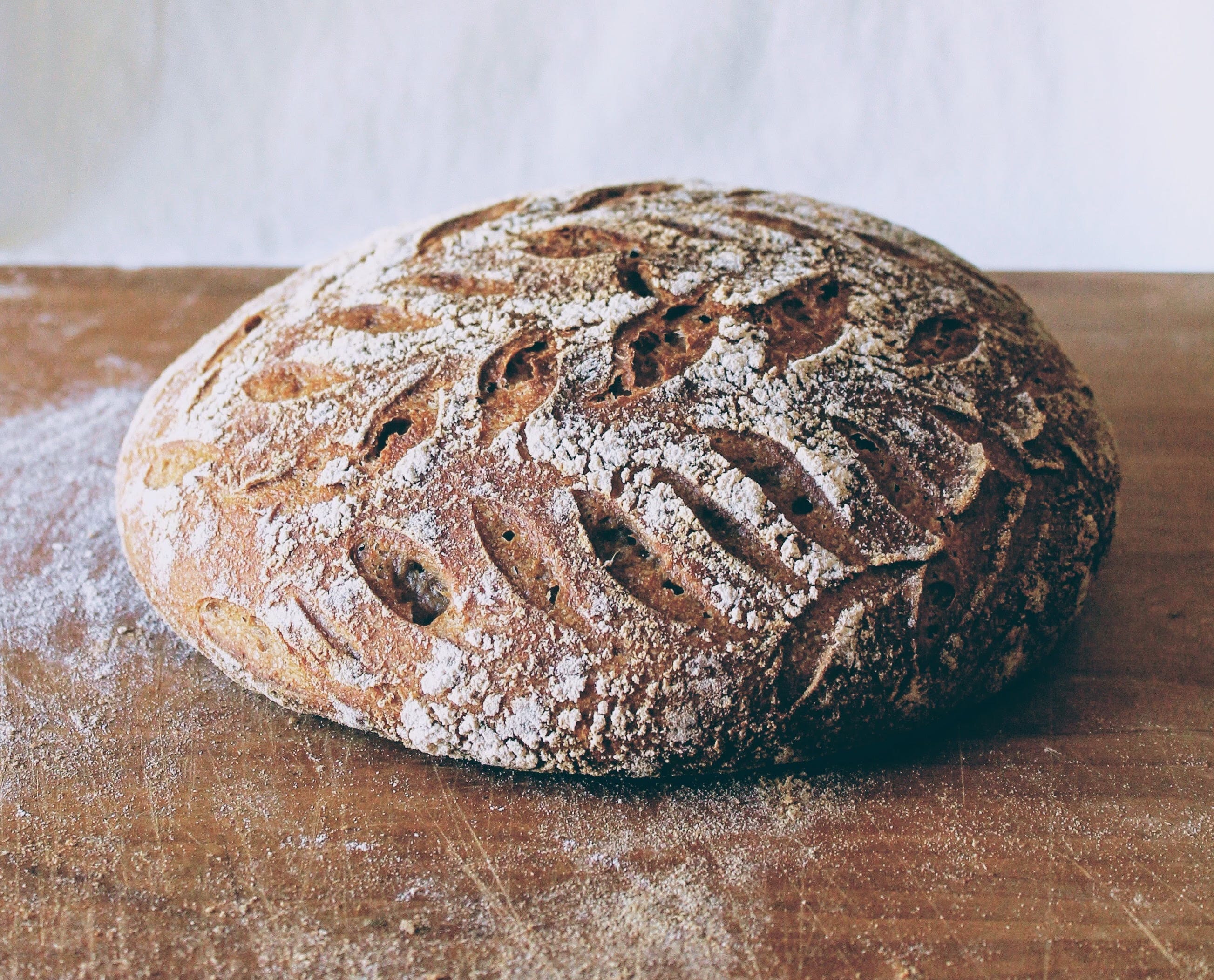
This might feel like a dumb question. In reality, there’s a lot of confusion about sourdough. They’re complicated little creatures (yes, sourdough is quite alive!) and if you have one, or aspire to have one, there are some things you’ll want to know about it.
What is sourdough?
Sourdough is a way to make bread that doesn’t use commercial yeast. Before commercial yeast, clever bakers would capture wild microbes from their environment. They did this with a sourdough starter.
A sourdough starter is a mixture of flour and water where these wild microbes (yeasts and bacteria) live. It’s a living thing that can be kept indefinitely with the right care. Without it, a sourdough starter can also die.
How does it work?
Wild yeasts are found all around us: in the air, on our skin, and on the surface of wheat, which is ground into flour. Wild yeasts produce carbon dioxide, which is trapped in the matrix of flour and water in the starter. The result: the mix will rise!
Lactic acid bacteria are also found naturally in our environment. They’re the same gut-friendly bacteria found in sauerkraut and they’re also found in a sourdough starter. They work alongside the yeasts and give off lactic acid, which provides many of the health benefits of sourdough.
The beautiful thing is that no two sourdough starters are alike. Like a snowflake or a fingerprint, they are a unique reflection of their environment and what microbes live there.
The basic way to care for your starter is by feeding it. To feed your sourdough starter, you mix a small portion of starter with a ratio of flour and water. Then you let it rest for 12-24 hours before feeding it again. There’s a bit of magic that happens between feedings, which I dive into in my sourdough feeding guide.


What are the benefits of sourdough?
Many people bake sourdough bread and other sourdough products for the added health benefits granted by fermentation (thank you, lactic acid bacteria). Some of these benefits include:
Easier digestion.
More available nutrients.
Lower glycemic index.
Better flavor.
Fewer ingredients.
Longer shelf-life.
What’s so bad about commercial yeast?
There’s nothing “bad” about commercial yeast. It’s just a different way of baking. Commercial yeast actually does a lot of good things for commercial bread production and home baking. The process is fast, predictable, and convenient.
Because of this, using commercial yeast requires less skill from the baker. This point can be seen as a positive or a negative, depending on how you look at it. From a commercial perspective, it’s absolutely a benefit: any one can jump in and learn how to bake. For a home baker who sees baking an a craft…maybe not so much.
On the flip side of sourdough, bread made with commercial yeast is lacking the same easier digestion, nutrition, reduced glycemic index, flavor, and shelf-stability.
What ingredients are used for sourdough?
It doesn’t get much more simple than sourdough. To make bread, all you need is: flour, water, salt, and a sourdough starter. To keep a sourdough starter, you just need flour and water. When using so few ingredients, it’s important to use the best quality.
Flour. You can use just about any gluten-containing grain. These include wheat, rye, einkorn, emmer, spelt, and khorasan. You can choose bread flour, all-purpose flour, or whole grain flour. It can be purchased at the store or milled fresh at home.
Water. Filtered water is the gold standard. Tap water can work too. If your tap water is high in chlorine, it can inhibit the way your sourdough works.
Salt. Unrefined sea salt doesn’t include added chemicals, which is better for your starter. The salt gives flavor to bread but also adds important changes to dough structure and helps control the bread-making process.
How can I get my own starter?
Ready to adopt a sourdough starter? You have options. You can:
Get a starter from someone else. This is the easiest way. Check Facebook Marketplace for sourdough starters in your area. You can find some online or maybe at your local health food store. You can get an existing sourdough that’s either fresh or dried.
Make your own starter. This process takes 7-10 days at least. It can be a fun and worth-while experiment, especially if you’re of the DIY mindset.
How can I take care of it?
If you’re just getting started with sourdough, check out my comprehensive sourdough starter guide. It has everything you’ll want to know about keeping a healthy sourdough starter and using it in different recipes.
Once you’re comfortable with your starter and how it works, you can try making bread! Try my beginner sourdough bread recipe and use your starter to make other things, like pancakes.