

How to feed a sourdough starter
And everything you ever wanted to know about the process—including taking a break.

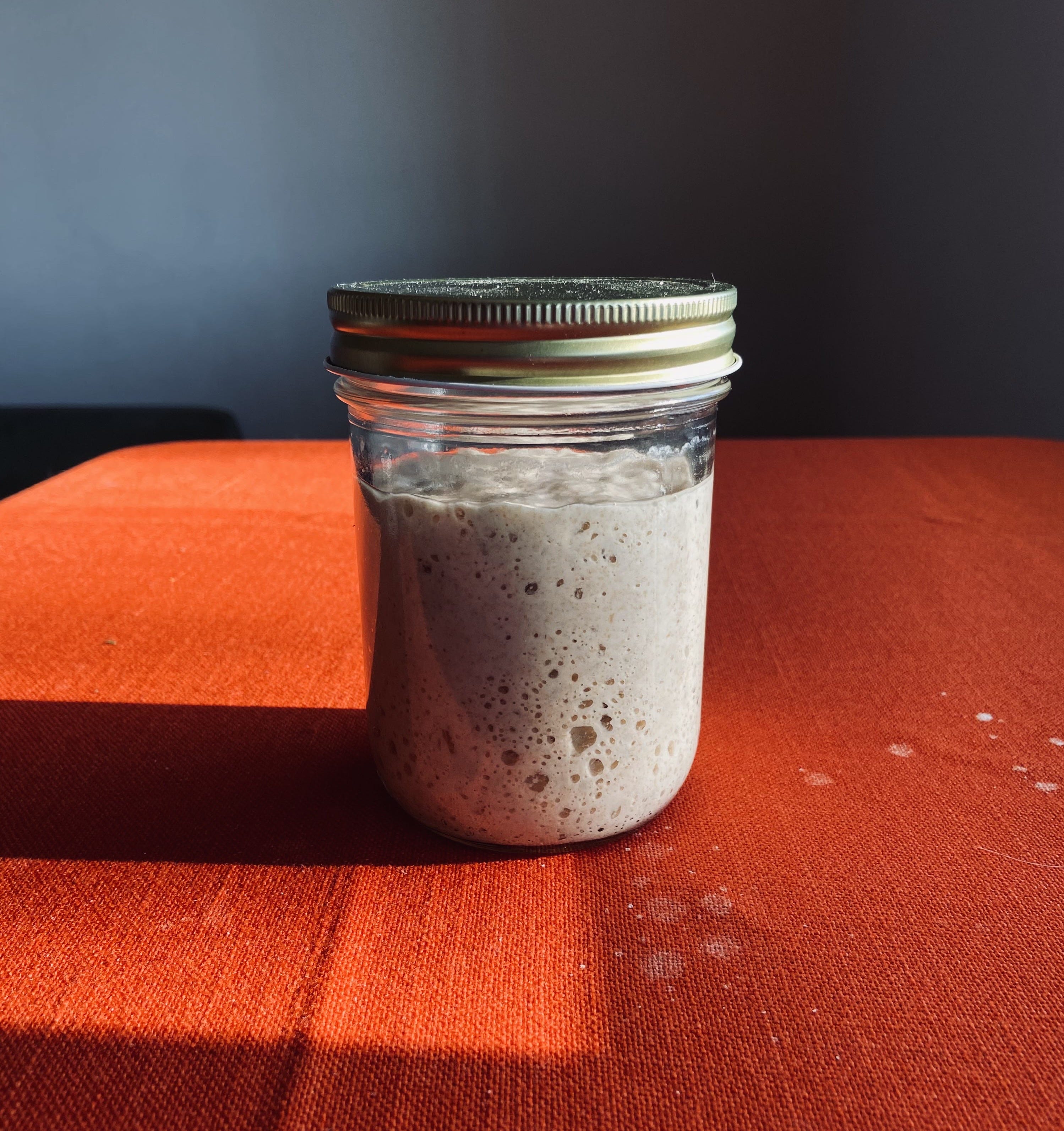
What is a sourdough starter?
A sourdough starter is a mixture of flour and water that houses wild microbes (yeasts and bacteria). They give off carbon dioxide that raises or leavens bread. Using a sourdough starter is how we made bread before commercial yeast became available. It’s also called a sourdough culture. It can be kept indefinitely when fed a mixture of fresh flour and water on a regular basis.
How can you take care of it?
Taking care of a sourdough starter involves feeding it regularly and making sure it has a safe place to be. This includes a clean jar with a loose fitting lid.
What do you feed it?
A sourdough starter is fed just flour and water.
Flour: you can use flour made from wheat, rye, spelt, einkorn, or khorasan. You can use whole grain flour, bread flour, or all-purpose. You can buy flour from the store or mill it yourself.
Water: filtered is best but tap water can work too. If you’re feeding your starter with tap water and having problems with it, your first troubleshooting set can be to try using filtered.
When do you feed it?
For general health and maintenance of your starter, try to feed it every 24 hours. Find a time that works with your schedule and stick to it. Note: your sourdough starter is also resilient and should be able to roll if a feeding doesn’t always happen on time.
You’ll feed your sourdough starter more often to get it ready for making bread. Feeding every 12 hours creates a robust and vigorous starter, ensuring bread success. This schedule might be used for 1-2 days before making bread.
How do you feed it?
To feed your sourdough starter, you mix a small portion of starter with a specific ratio of flour and water. Here’s how you do it:
What happens during a feeding?
The feeding itself is simple but there’s a lot going on from one feeding to the next.
Wild yeasts and bacteria are gobbling up starches in the flour.
They give off carbon dioxide and you’ll see visible air pockets forming.
The entire mix will begin to rise. Eventually, it will double in volume and there will be bigger bubbles throughout the mix.
It collapses back down and small bubbles remain. The starter is ready for another feeding.
This is the cycle of fermentation and it happens every time you feed your starter.
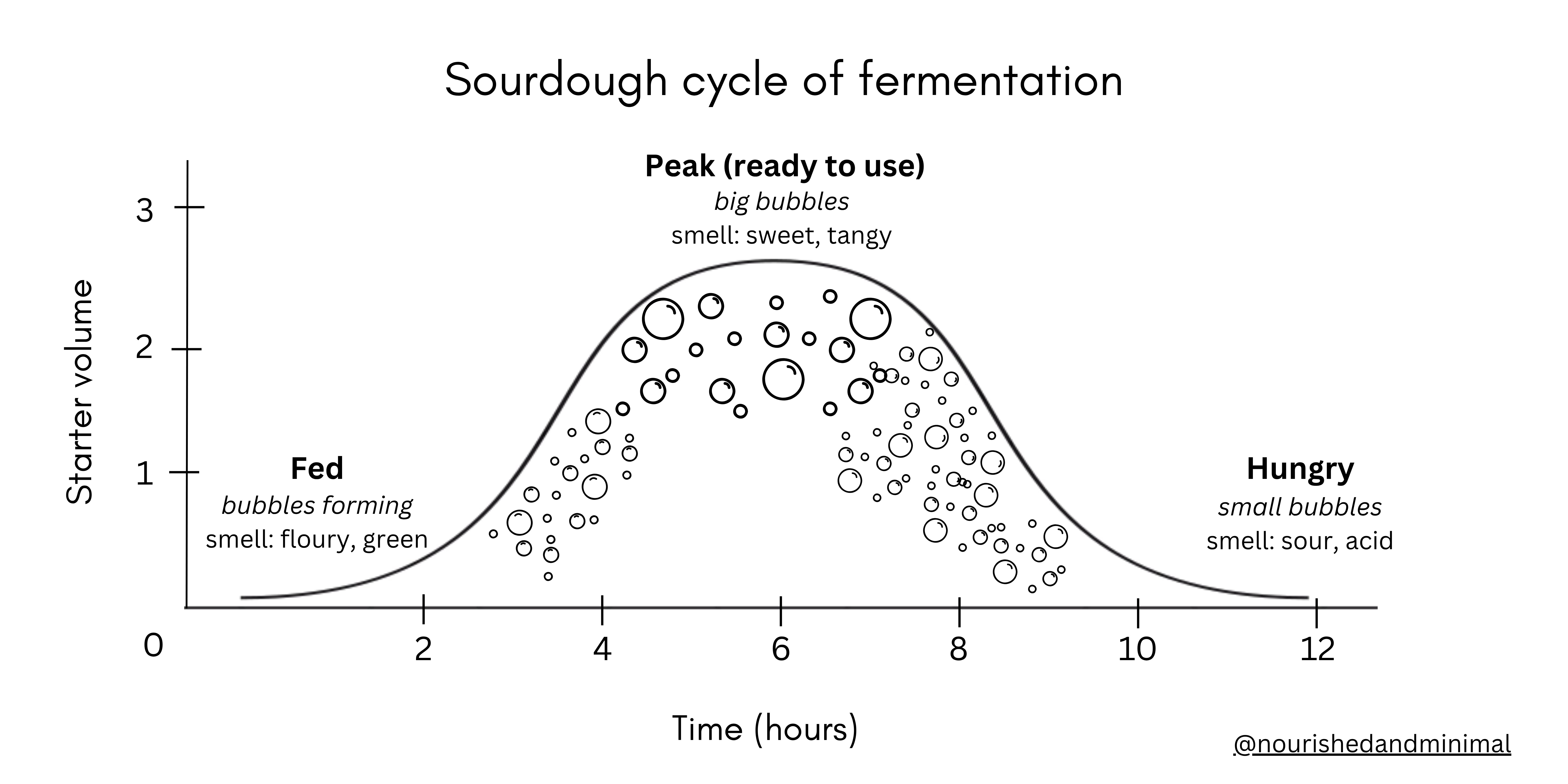
There are 3 stages of fermentation happening within the cycle of fermentation and we use our senses to help define them:
Fed. Looks like a blob at first, then small bubbles still start to form. Smells floury and green.
Peak fermentation. Doubles in volume with big and small bubbles throughout. Smells sweet and slightly tangy.
Hungry. Mix begins to sink back down in the jar and many small bubbles remain throughout. Smells sour and acidic.
Bakers use terms to define a sourdough starter at each stages of fermentation.
Fed is a young starter. It’s still building activity and not ready for use.
Peak fermentation is an active starter. The starter is full of activity and ready to be used to make bread.
Hungry is a discard starter. The starter still has some activity and can be used in recipes calling for discard starter.
Here’s a more visual way to think about everything happening during a feeding:
And here’s what a starter looks like at each stage of the sourdough cycle of fermentation:


When is a sourdough starter ready to make bread?
A starter is ready to make bread when it’s at peak fermentation. If you check the graph above, it’s in the middle of the fermentation cycle. You know it’s ready when it’s doubled in volume in the jar.
There’s no magic time for when your starter will reach peak fermentation. It changes depending on several factors, including temperature and humidity.
Timing is key. Knowing about when your starter doubles it just right is how you will catch your sourdough starter at the perfect point of peak fermentation.
After feeding, check your starter’s activity after 4 hours. When it’s hot out, your starter might be ready now. If it’s not, wait another hour or 2. When it’s cold out, your starter might be ready closer to 8 hours. Its activity won’t change day to day, more like season to season. Adjust as needed to catch your starter at its peak fermentation each time.
What is discard?
When you feed your sourdough, you only use a small portion (1 tablespoon) of starter. The rest is considered discard and can be saved up in the fridge.
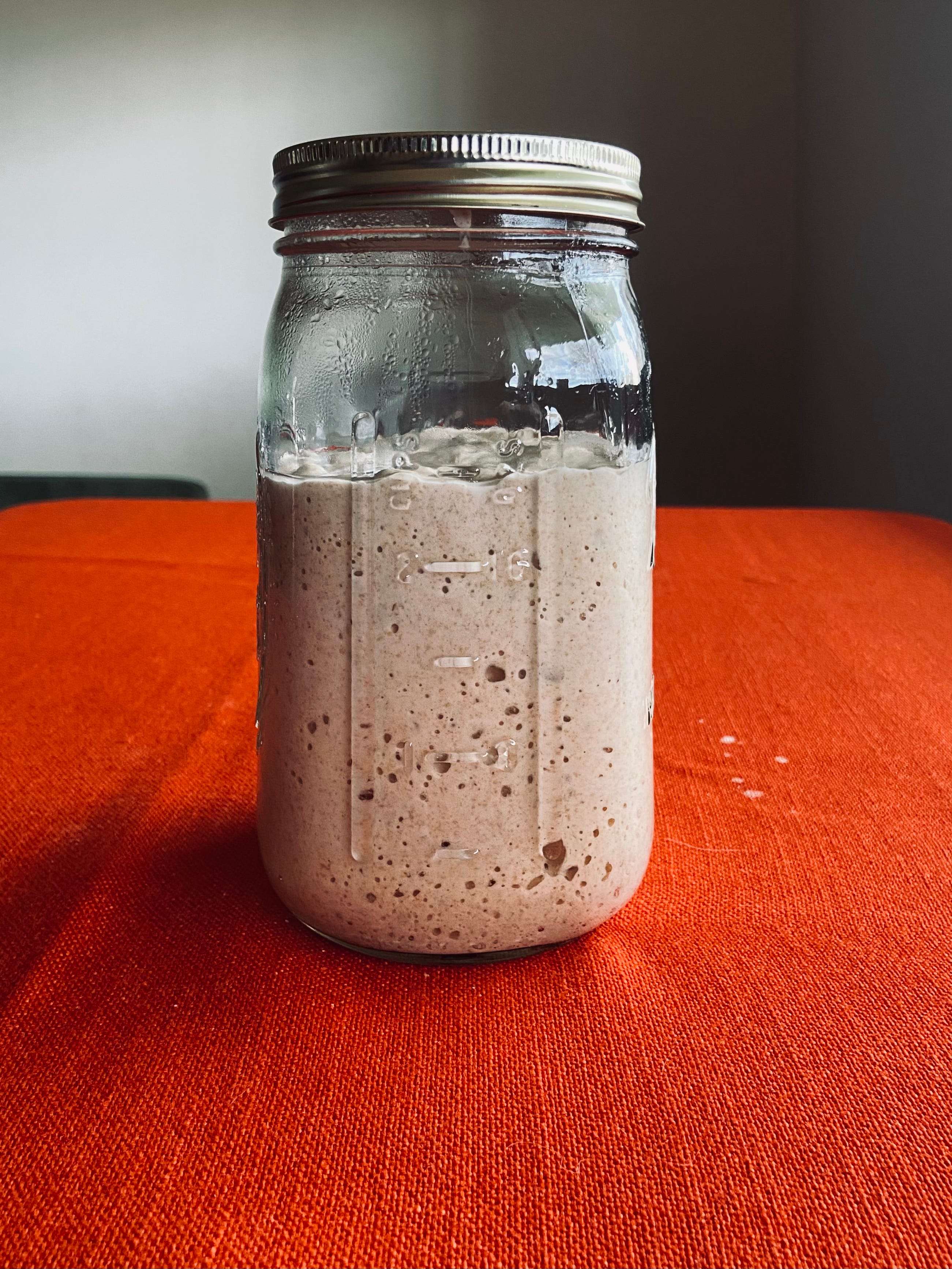
Discard starter is leftover starter that doesn’t get fed again. It’s not worthless though! You can save it to use for other recipes.
You can accumulate discard in a jar in the fridge for about a week. You can still use it after that, but the flavor becomes increasingly sour and potent.
Discard is used only for recipes designed specifically for sourdough discard. It doesn’t leaven (or rise) a product but still adds tangy sourdough flavor and, if long-fermented, can add to the health benefits of using sourdough.
Can you take a break?
A sourdough starter is a lively little ferment. It needs regular attention to stay healthy and quickly multiples. But what happens when you go on vacation?
We all need a break! Maybe your sourdough starter would like a break too.
To take a break from your sourdough starter, feed it, place the lid on the jar, put a label on it with the date, and stick it in the fridge. It can hang out there for a week or 2 at least.
What happens in the fridge?
When you leave your starter in the fridge, it goes into a sort of hibernation. It’s still fermenting but at a much slower rate than at room temperature.
When in the fridge, it’s perfectly normal to notice a grey-ish hue and even a layer of clear or dark liquid at the top. This liquid is called hooch and it’s harmless. It’s a sign that your sourdough starter is hungry. Just pour it off when you’re ready to feed again.
What happens after hibernation?
If you went into the fridge for a few weeks, you’d need some time to liven up. Same for your starter.
To get started with your sourdough again, bring it out of the fridge and feed it. Let it sit at room temperature for 24 hours and feed it again. Repeat.
It may be a tad sluggish, depending on how long it was under cold storage, but it should be back to its regular voracity after 1-3 feedings.
To extend your break and ensure the health of your sourdough starter, you can also feed it and put it right back in the fridge again. The longer your sourdough starter is under cold storage, the longer it’ll take to become vigorous again. It doesn’t mean it won’t, it’ll just take a number of room temperature feedings and patience. In the meantime, all that discard starter can be used in other recipes.
Sourdough starter best practices
As you can see, a sourdough starter has a life of its own. Here are my best practices and tips for your sourdough starter’s best life:
Use a digital kitchen scale. This makes feeding your starter and modifying the feeding amount easier and more precise.
Be consistent. Feed your starter at about the same time each day. For example, if mornings work best, be sure to feed your starter in the morning. Not at 2pm some days.
Use a 2-jar feeding system. You only need 2 jars for 1 sourdough starter: a pint jar that houses the just fed starter and a quart jar that holds the unused mature starter, otherwise called discard. Here’s what it looks like:
All of the just fed starter goes into the pint jar.
The starter goes through the fermentation cycle.
At the end of the cycle, a small portion of the mature starter is removed to a bowl to be fed.
The rest of the mature starter goes into the quart jar.
The pint jar is cleaned and just fed starter goes into the pint jar.
Be prepared for possible overflow. If your jar is too small for your doubling starter, it will bust through the lid like a geyser. Try to fill your jar no more than halfway with freshly fed starter. To be sure to contain any possible overflow, place the jar on a sheet pan. Discard starter will not rise very much in the fridge, so feel free to fill that jar up and store it for later.
Make sure everything is clean. Spoons, jars, bowls, lids, hands. This ensures success. Things don’t need to be sanitized just cleaned with soap and water.
Expect that your starter will be sluggish after being in the fridge for more than a week. Keep feeding it at least every 24 hours. Stick with it and it’ll come back to life.