

Simple sourdough focaccia
Let's make pillowy slabs of crispy sourdough cloud bread (AKA focaccia).

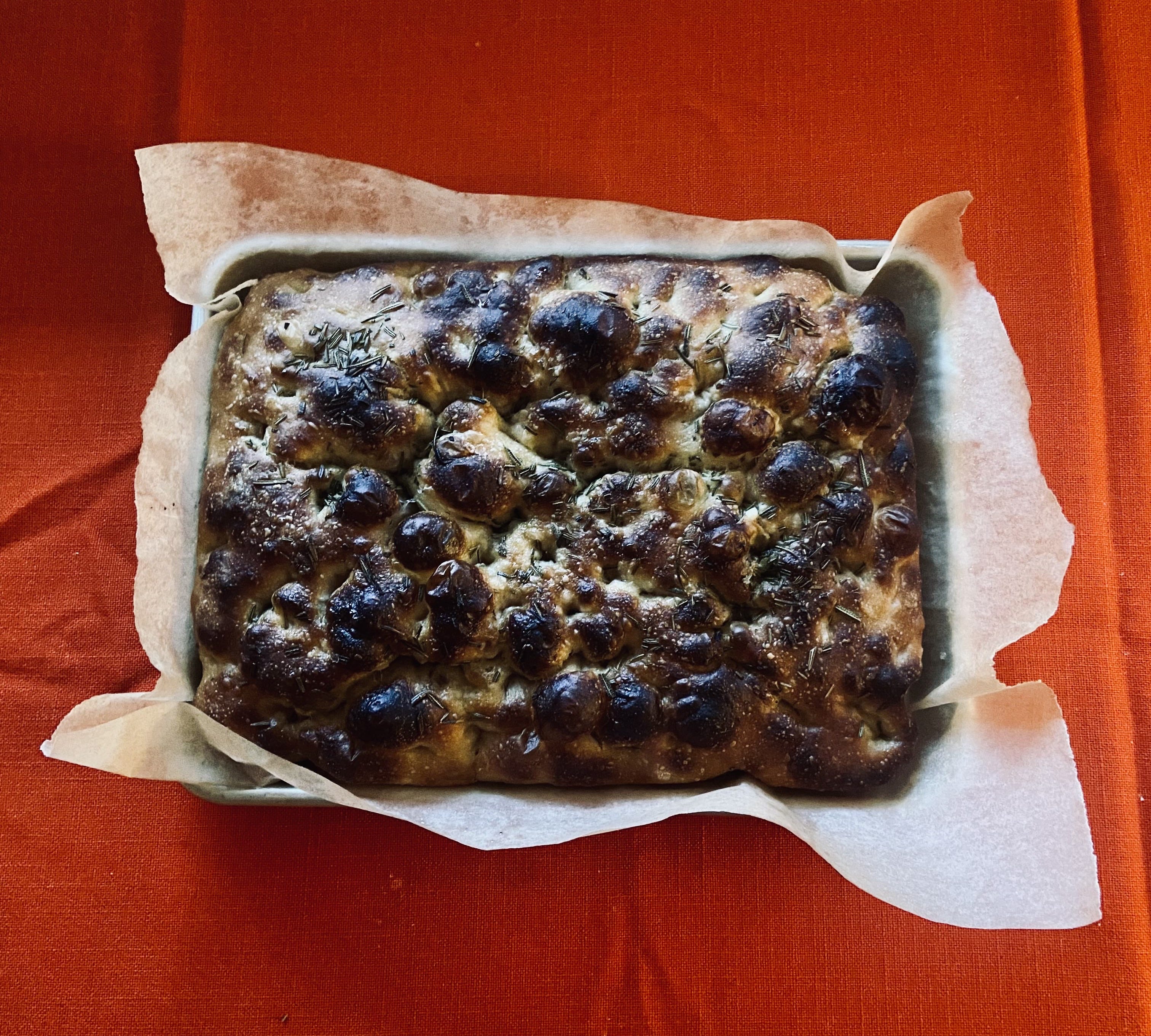
Focaccia is a rustic flatbread from northern Italy. It’s light and fluffy, perfect for sandwiches, burgers, and sopping up all kinds of sauces. With a high-hydration dough and longer proofing times, the structure of focaccia is open, soft, and spongy. If there ever was a bread that was secretly a cloud, this is it.
Think of focaccia like a blank canvas. There’s a lot of science to making focaccia but also a fair bit of creativity with the flavors. Toppings simply go on before dimpling and are pressed into the dough before baking—along with a good glug of olive oil. The classic is fresh rosemary and flaky sea salt but other perfectly acceptable toppings include olives, cherry tomatoes, and fresh thyme. Or you could change gears entirely and go the sweet route, which makes this bread feel more like coffee cake. (Think lemon blueberry or dark chocolate raspberry.)
As for the classic rosemary focaccia, here’s how to make it.
Ingredients for making sourdough focaccia
The dough is only flour, water, starter, and salt. Olive oil is an important ingredient that goes in the pan to keep the dough from sticking and on top to create that lacy, crispy yet soft texture of focaccia. The toppings are the cherry on top. Choose your own adventure.
Unbleached bread flour
Water
Active sourdough starter
Salt
Olive oil
Toppings of choice: rosemary, thyme, thinly sliced onions, cherry tomatoes, olives, etc
Equipment you’ll need
Gather your supplies before you bake. Here’s what you’ll need:
Digital kitchen scale
Digital thermometer
Large mixing bowl with lid
9x13-inch metal baking sheet (quarter sheet tray)
Parchment paper
Cooling rack
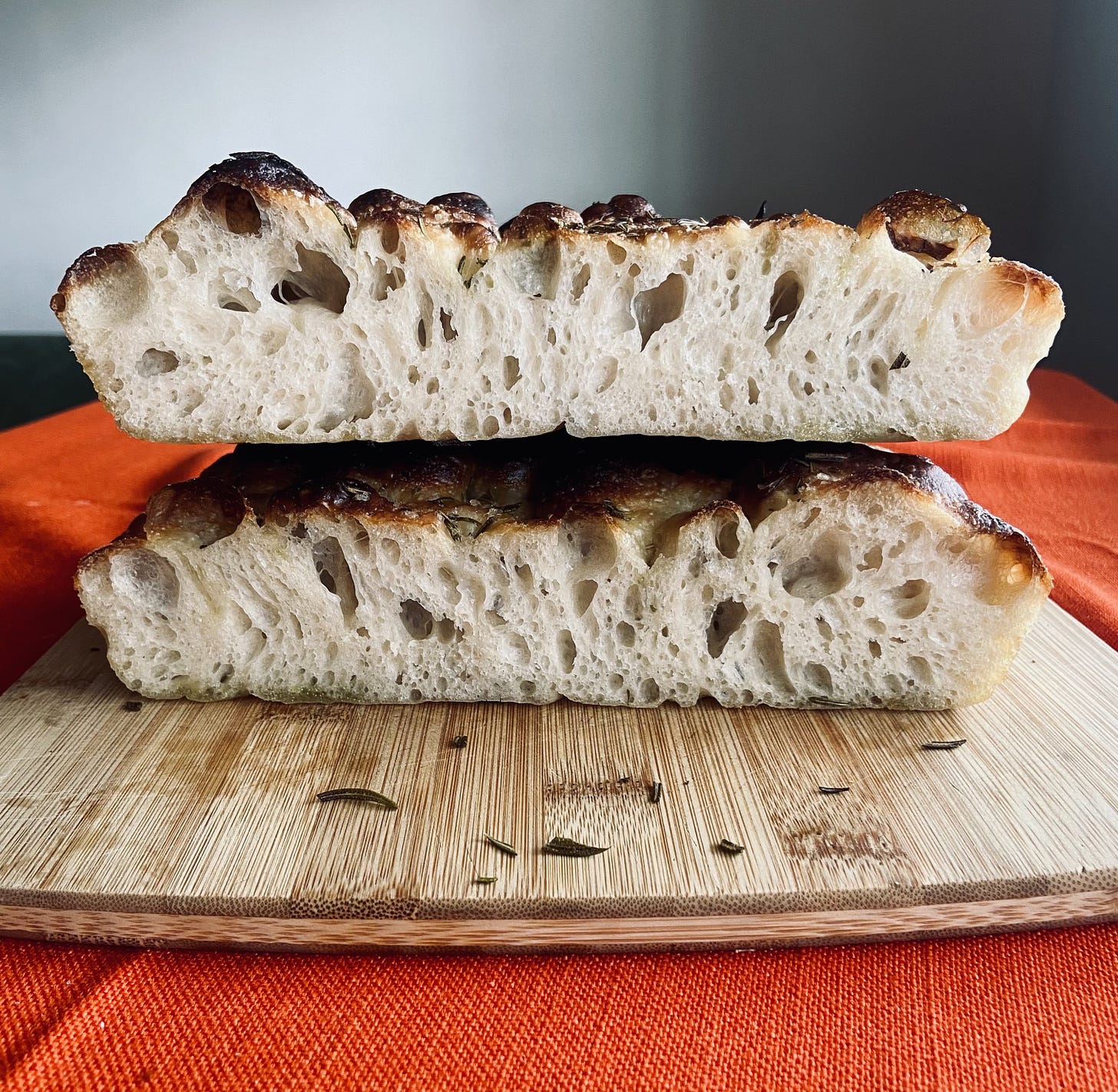
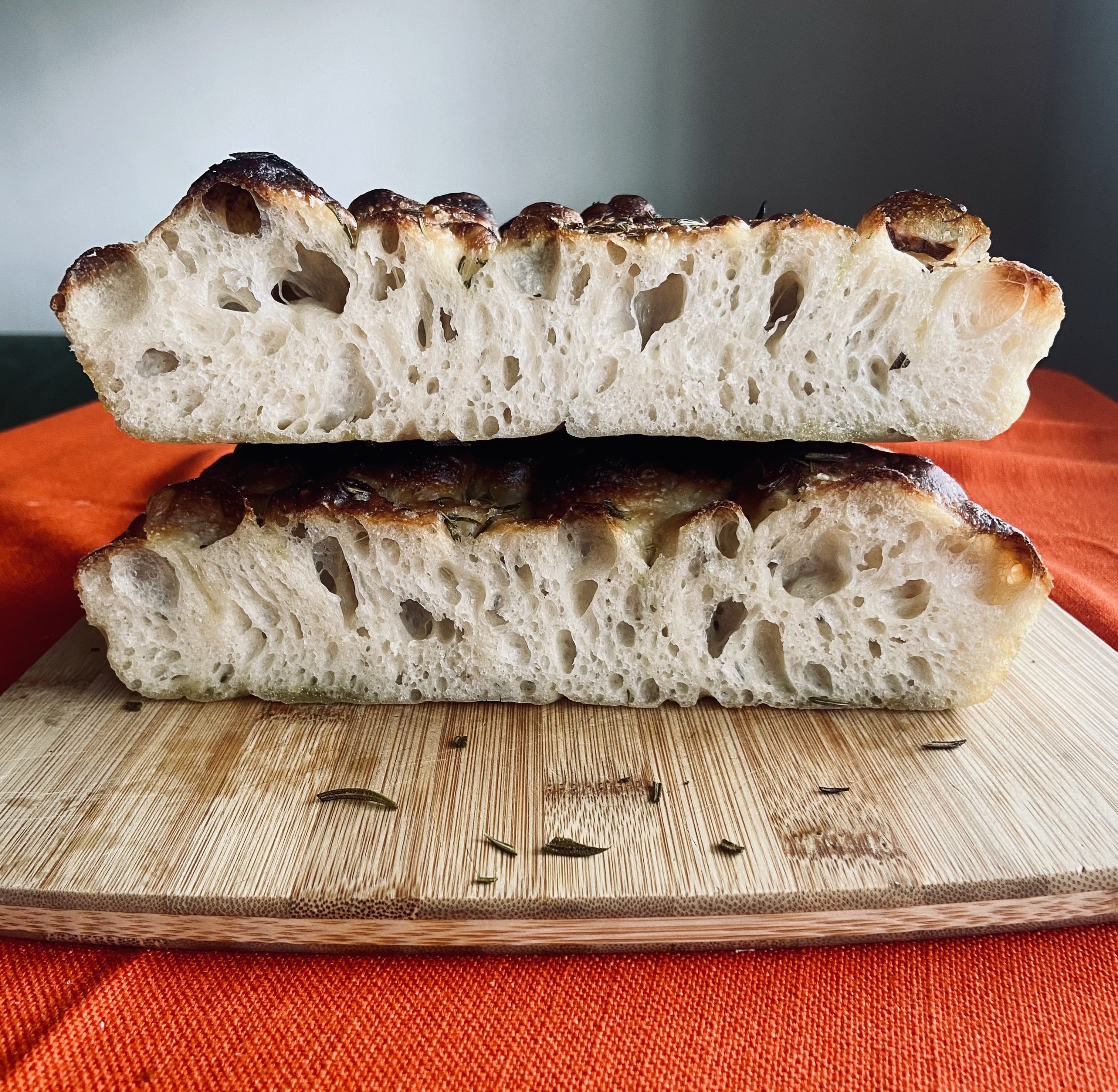
focaccia makes the best sandwich bread!
Sourdough focaccia baker’s timeline
This is a handy way to think about baking focaccia and the time you’ll need for each step.
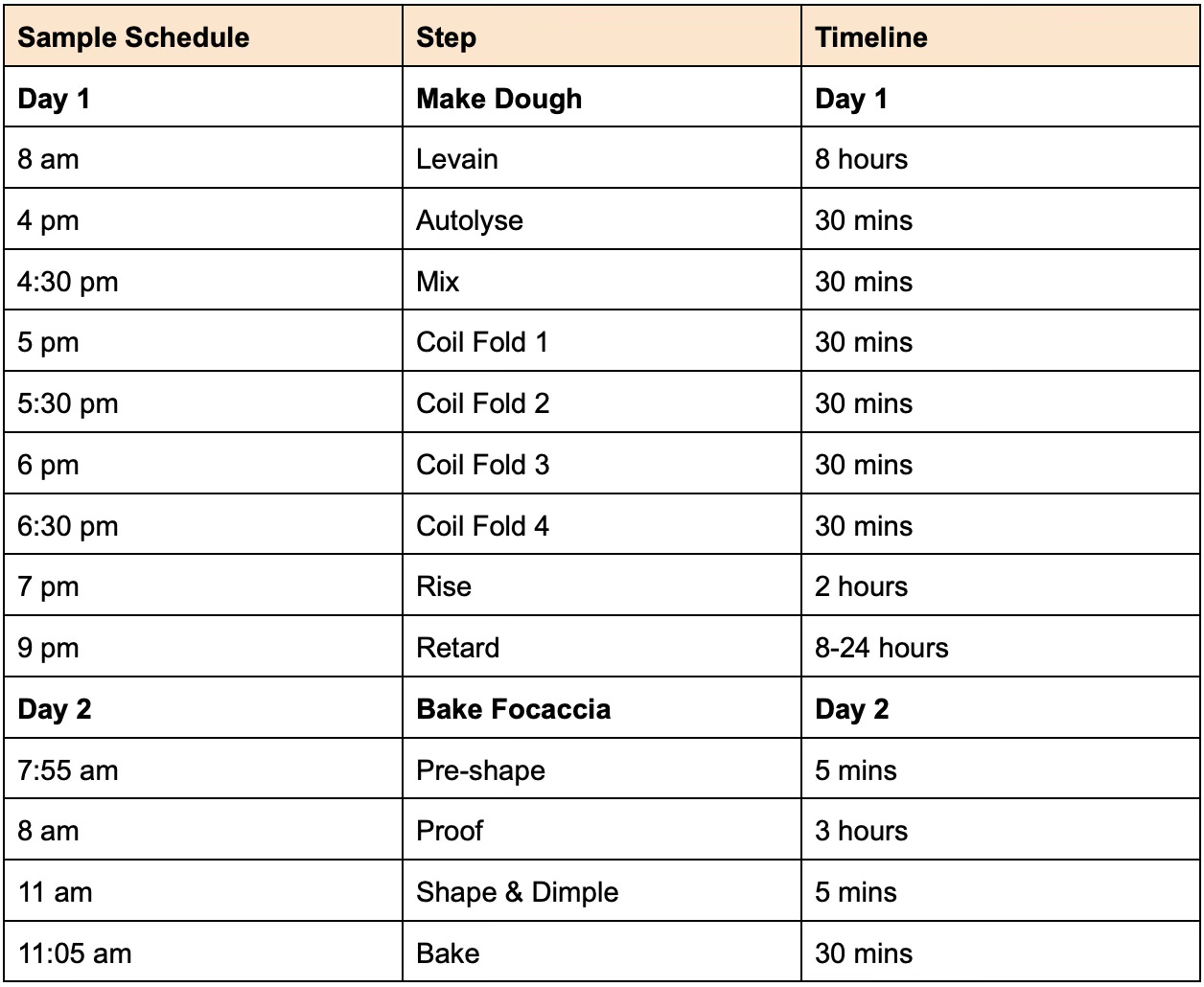
Here’s an even easier way to calculate your baking timeline. It’s my custom bake planner for beginner bread and focaccia. You put in how many loaves you want to make and your levain start time, then it calculates it all for you.
How to make sourdough focaccia
This is everything you need to know about the process: step by step. Let’s get into it.
Day 1
Build the levain.


Mix together the levain ingredients. Place it in a quart-sized jar, mark the jar with a rubber band where the mix starter, cover the jar loosely, and leave to ferment at room temperature for 7-12 hours. It’s ready when it has doubled in volume and floats in water. The timeline will change depending on temperature: warmer equals faster fermentation and a shorter timeline. This temperature rule also applies to making the dough.
Autolyse.


In a large bowl, mix the water and levain until dissolved. Mix in the flour until there are no lumps. Using a dough whisk can be helpful but nothing beats mixing by hand! Cover the bowl and let the dough rest for 30-60 minutes.
This is a rest time to let the flour hydrate. It helps with extensibility and trapping precious gasses that give focaccia its signature open crumb.
Mix the dough.


Add the salt and a splash of water. Squish the dough together with your hands until everything is incorporated. Cover the bowl and let it rest for 30 minutes.
Bulk fermentation with coil folds.


During the bulk fermentation, we develop gluten slowly without kneading. For the bulk fermentation, you’ll do 4 sets of coil folds, one every 30 minutes, over 2 1/2 hours.
How to do a coil fold: dip your hands in water and place both hands under the center of the dough from opposite sides. Pull the dough straight up, so it releases from the bowl without tearing. Set the dough back down in the bowl and let it fall back under itself. Rotate the bowl and repeat 4-6 times. This is one coil fold set.
The dough will be very sticky and relaxed to start. It'll get stronger and easier to pick up after each coil fold set.
Rise.


After the last coil fold, keep the dough covered and let it rest for 1 1/2 to 2 hours. Check every 30 minutes or so to make sure the dough temperature is at about 78°F. The dough should rise about 30% in the bowl.
Retard.


Place the bowl in the fridge to finish rising overnight. It can stay here for 8-24 hours until you’re ready for the next step.
This slows fermentation down, giving the dough longer fermentation time and greater sourdough benefits.
Day 2
Pre-shape the dough.


Line a quarter sheet tray with parchment paper. Pour 40 grams of olive oil into the pan and spread it around the entire bottom of the parchment.
Add the dough and spread it out gently to fill the pan. Do this by pulling from underneath the dough and gently moving it out from the center towards the edges. It's okay if the dough springs back to the center. You'll shape it again before baking.
Proof.
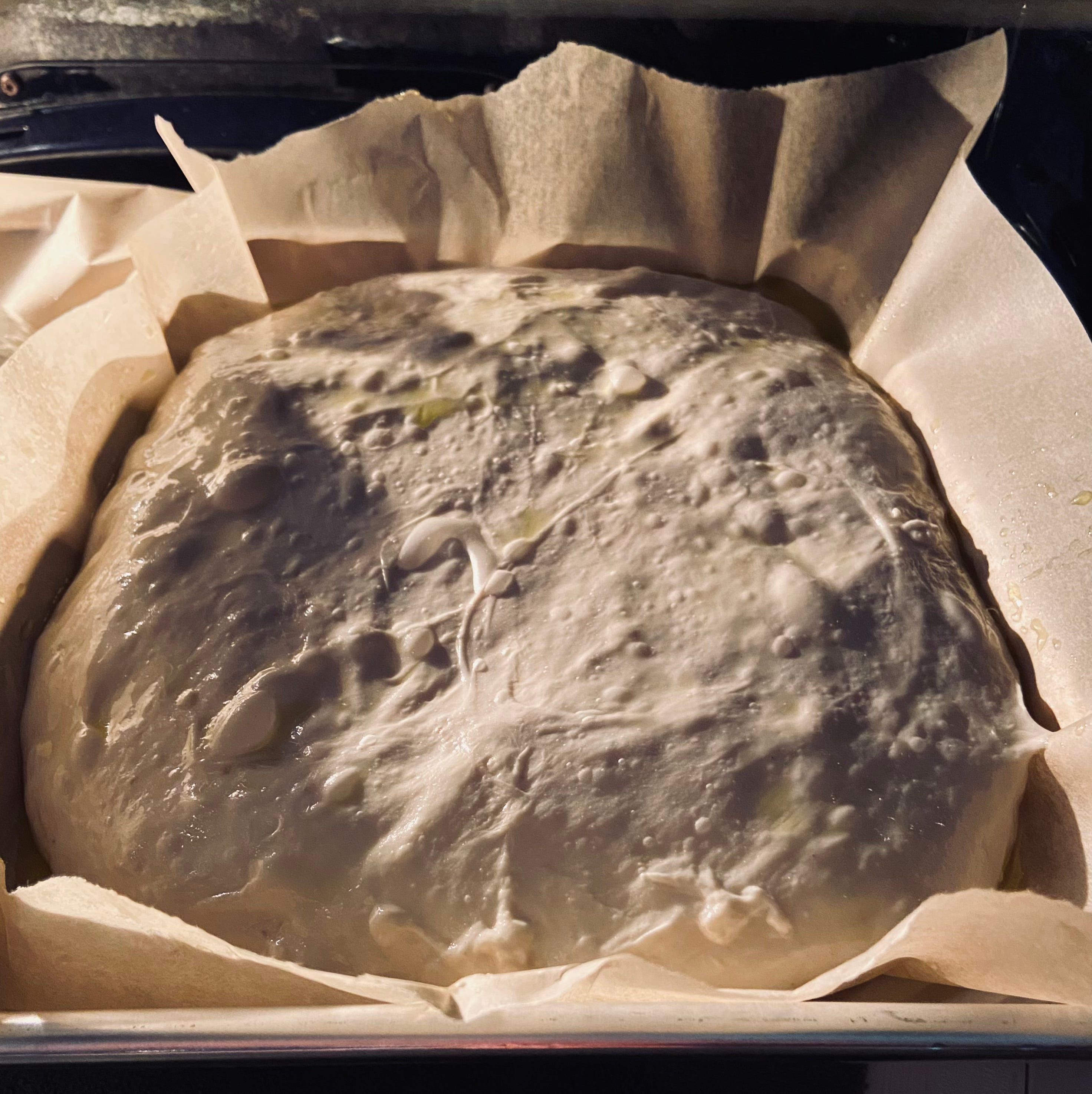
Let the dough rise for 2-3 hours or until puffed up and jiggly. Make sure the dough temperature stays at about 78°F.
Shape and dimple the top.


Gently spread the dough out to fill the pan evenly to the edges. Pull the dough gently up and out from its belly, moving from the center out. Drizzle the remaining 30 grams of olive oil on top of the dough and sprinkle with the flaky sea salt and rosemary.
How to dimple: press all your fingers straight into the dough. Start on the short side of the pan and move to the other side (and maybe back again) until the entire focaccia is dimpled and bubbly.
Bake the bread.

Preheat the oven to 425°F. Bake focaccia for 25-30 minutes until golden brown and crispy. Cool for 10 minutes before removing to a wire rack.
Happy baking!
—Kala