

Sourdough starter beginner guide
Everything you need to know about a sourdough starter, including feeding, care, and taking breaks.

All good things must start somewhere. Before we get to sourdough bread, we have to start with the sourdough starter. It’s the mother that births all sourdough things.
A sourdough starter is at once simple and complex. Folks have lots of questions about the science and art of sourdough. Just as there are many different bakers and styles and preferences, there are many different answers and none of them are wrong.
This is my method for keeping a healthy sourdough starter. My goal is to keep things simple, because sourdough is simple. You care about the food you eat and you want it to be full of nutrition. And, if you’re anything like me, you also want it to be easy to make. Using a sourdough starter is a great way to do both.
So let’s dig into the basic questions about a sourdough starter, including how to take care of one.
What is a sourdough starter?
A sourdough starter is a mixture of flour and water that houses wild yeasts and lactic acid bacteria. They give off carbon dioxide that raises or leavens bread. Using a sourdough starter is how we made bread before commercial yeast became available. It’s also called a sourdough culture. It can be kept indefinitely when fed a mixture of fresh flour and water on a regular basis.
Why use a sourdough starter?
While a sourdough starter can be used to leaven bread, it also does some pretty amazing things. (When you think about it, creating lofty, airy, light, chewy bread is already pretty remarkable.) Other benefits and reasons to use a sourdough starter include:
Making bread rise. This is how bread was made before commercial yeast became available. To make bread with sourdough, it requires time, patience, skill, knowledge (read: practice, practice, practice), and a good formula. When it’s new, sourdough can feel like a complicated process. With practice, it gets easier and becomes almost second nature.
Reducing phytates. Seeds from plants want to become plants, so they have protective strategies to ensure their success. These are phytates. They make sure that important minerals are there for plant growth and development. Phytates block these minerals, so we can’t absorb and use them. They’re great for a seed but not so good for us. A sourdough culture (more specifically, its lactic acid) works to break down these phytates, making plant seeds (grains, seeds, nuts, and beans) easier to digest and more nutritious.
Adding flavor to baked goods. The tangy flavor of sourdough holds a special place for most. Imagine a crusty loaf of sourdough bread with a schmear of room temperature salted butter. Bliss. This same sourdough flavor can be made strong and sour or mellow and subdued. The taste and scent lends itself well to biscuits, breads, muffins, and tortillas.
Slowing you down—in the best way. Working with sourdough infuses you with intention and connection. It requires planning and is in no way fast. In fact, I can’t think of slower food. That’s part of the beauty of it. The process, though slow, isn’t very hands on. It allows you to bake in the background and live your life while you also make sourdough stuff.
Fostering connection. Some people fondly name their starters and even travel with them. They become a sort of beloved pet. Once you find your groove with it, it can be part of your routine and even part of the family.
What can you make with a sourdough starter?
Just about anything you bake with flour can be made with sourdough. Of course, sourdough can be used to bake bread. It can also be used to make other things, including tortillas, biscuits, pancakes, and desserts, such as brownies, pie crusts, and birthday cakes. (Yes, birthday cakes.)
How does a sourdough starter work?
A sourdough starter is a living thing. It needs shelter, food, and water to survive. To thrive, it needs these things on a regular basis. Without these basic conditions, a sourdough starter can also die. The basic way to care for your starter is by feeding it.
You feed a small portion of your sourdough a ratio of fresh flour and water. In a 12-hour window, those wild yeasts and bacteria will breakdown the flour and produce C02. It will reach peak fermentation (about double in volume) before the mix collapses back down and is ready for another feeding.
This is the cycle of fermentation and it’s what happens every time you feed your starter. Here’s a visual of what happens throughout the cycle:
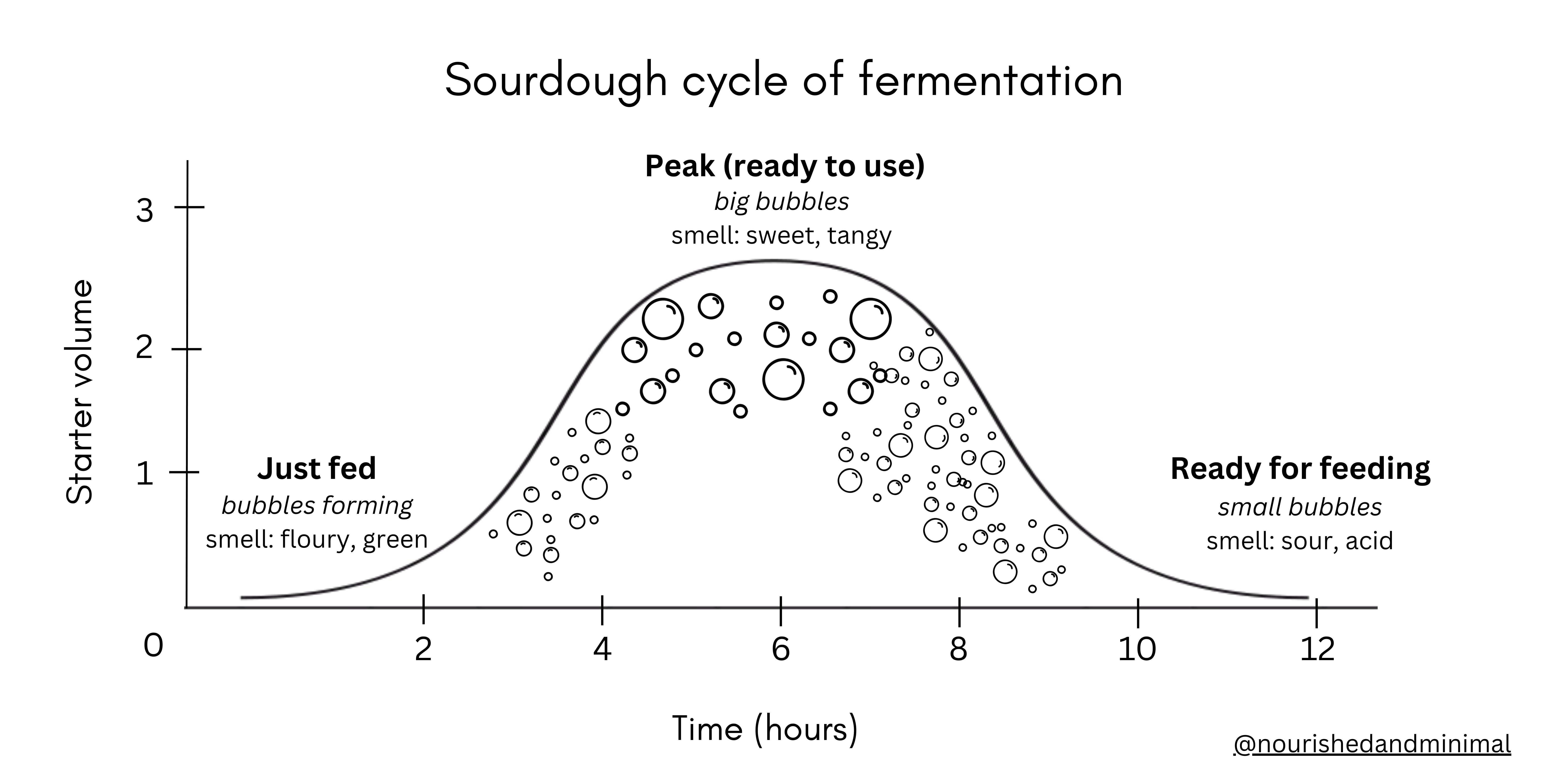
We use terms to define a sourdough starter at different stages of fermentation. Bakers call a just fed starter a young starter, a starter at peak fermentation is called an active starter, and a starter ready for another feeding is called a mature starter.
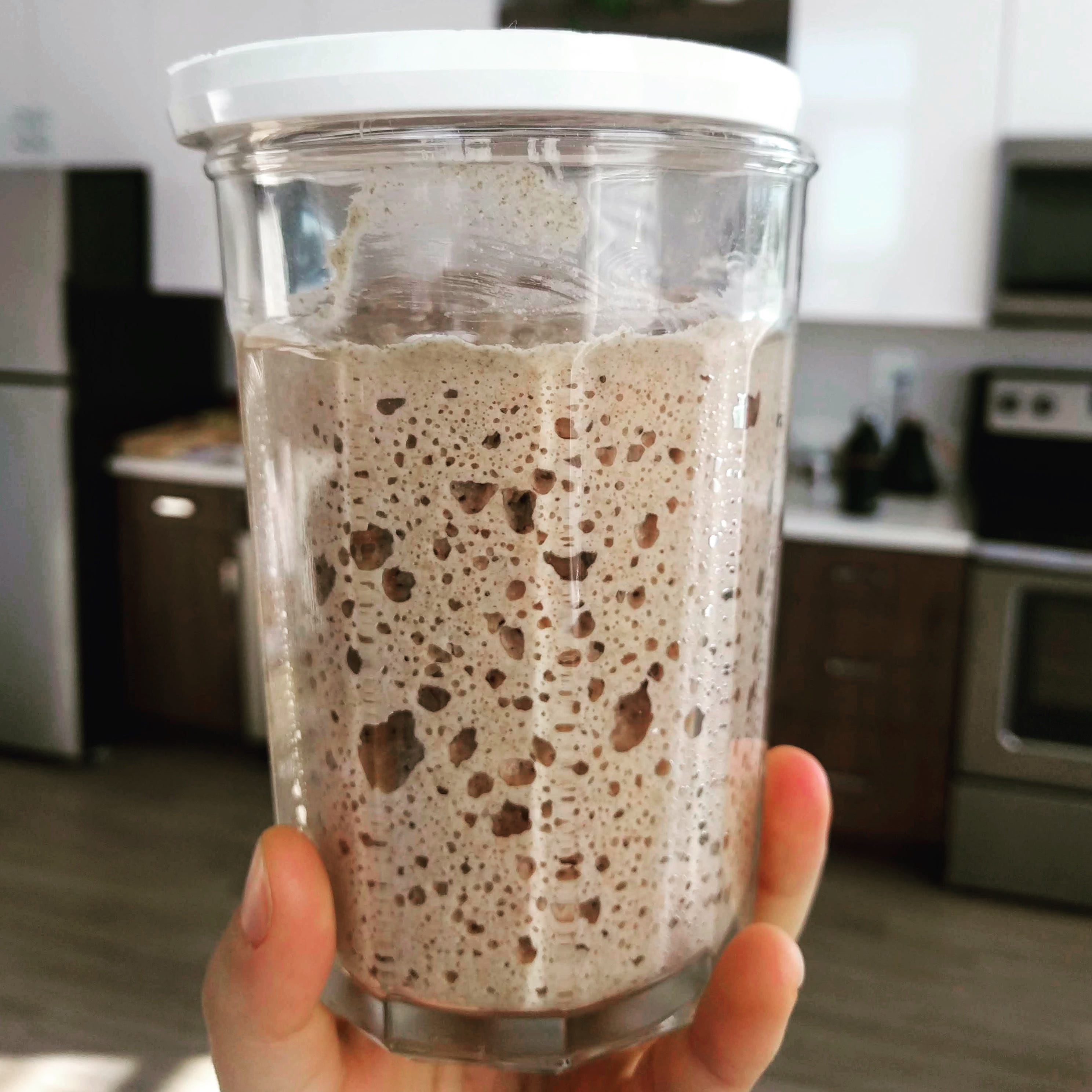
Here’s what the sourdough cycle of fermentation looks like in real life.


Starters can be defined as active or discard (or toss off). This has to do with when the starter was fed and where it is in the fermentation cycle.
An active starter is in the middle of the fermentation cycle and is at peak fermentation. It’s full of activity, hence the name. It’s ready for vigorous jobs, like baking bread. The flavor will be mellow and subdued for use in other recipes. You can use active sourdough in place of discard but it doesn’t work the other way around.
Discard starter is what is removed or “tossed off” after a feeding. (More on the feeding below!) You can accumulate discard in a jar in the fridge for about a week. Anything more than that and the flavor becomes increasingly sour and potent. Use it for recipes designed specifically for sourdough discard.
How can you take care of a sourdough starter?
Taking care of a sourdough starter involves feeding it regularly, making sure it’s warm enough, and keeping its jar clean. It’s not so different from us. But there’s lots of nuance. Feeding it “regularly.” Making sure it’s “warm enough.” Clean can even mean different things to different people.
We’ll unpack all of these together. Let’s start with feeding.
What do you feed a sourdough starter?
A sourdough starter is fed flour and water.
Flour options are almost endless. You can use whole rye, whole wheat, all-purpose, bread flour, spelt, or einkorn. You can buy the grains and mill them yourself or buy flour from the store.
For water, filtered is the gold standard but tap water works too. Just make sure it’s room temperature before feeding. (See “Sourdough starter best practices and tips of the trade” for more on temperatures.)
When do you feed a sourdough starter?
Try to feed your sourdough starter at least once every 24 hours. Feeding every 24 hours will keep your sourdough starter healthy. Find a time that works with your schedule and stick to it. Note: your sourdough starter is also resilient and should be able to roll if a feeding doesn’t always happen on time.
Feeding every 12 hours creates a robust and vigorous sourdough starter. This schedule might be used for 1-2 days to prep your starter for making sourdough bread.
How do you feed a sourdough starter?
To feed a sourdough starter, you’ll need a scale, clean mixing bowl, spoon, and a glass jar with a lid. You can feed your starter without a scale but I (and all sourdough bakers) highly recommend using a scale for sourdough baking.
Weigh out 100 grams (about 1/2 cup) of filtered water in a clean bowl. Add 100 grams (about 3/4 cup) of fresh flour. Spoon in 20 grams (about 1 tablespoon) of sourdough starter into the bowl with the water and flour. Mix everything well and plop it into the jar. Cover the jar loosely and place it on the counter at room temperature.
That’s it.
After 6-12 hours, your starter should double in size and have begun to collapse back down in the jar. Then it’ll be ready for another feeding.
For every feeding, you only use about a tablespoon of sourdough starter. That means everything else in the jar becomes discard, which you can use in recipes right away or tuck away in the jar in the fridge for later.
Though feeding regularly keeps your sourdough strong and healthy, I don’t feed my starter everyday. You don’t have to either unless you want sourdough coming out of your ears. (I have BEEN THERE.) There are ways to keep an active starter without feeling chained to the feeding schedule it requires or tossing sourdough starter into the compost.
Taking a break
A sourdough starter is a lively little ferment. It needs regular attention to stay healthy and quickly multiples. What happens when you don’t want to make bread for a few weeks or go on vacation?
We all need a break! Maybe your sourdough starter would like a break too.
To take a break from your sourdough starter, feed it, place the lid on the jar, put a label on it with the date, and stick it in the fridge. It can hang out there for a week or two at least. When you leave your starter in the fridge, it goes into a sort of hibernation. It’s still fermenting but at a much slower rate than at room temperature.
When you pull your sourdough starter out, it’s perfectly normal to notice a grey-ish hue and possibly a layer of clear or dark liquid floating at the top. This liquid is called hooch and it’s harmless. It’s a sign that your sourdough starter is hungry. Pour it off and continue feeding your starter as you normally would.
To get started with your sourdough again, bring it out of the fridge and feed it mentioned above (100 grams water, 100 grams flour, 20 grams starter), letting it rest again at room temperature. It may be a tad sluggish, depending on how long it was under cold storage, but it should be back to its regular voracity after 1-3 feedings.
To extend your break and ensure the health of your sourdough starter, you can also feed it and put it right back in the fridge again. The longer your sourdough starter is under cold storage, the longer it’ll take to become vigorous again. It doesn’t mean it won’t, it’ll just take a number of room temperature feedings and patience. In the meantime, all that discard starter can be used in other recipes.
How can you build enough sourdough starter for a recipe?
Feeding your sourdough starter with the given ratio will give you about 100 grams of active sourdough starter. Total. So if you have a recipe that calls for 100 grams of sourdough, you’ll want to make a bit more so that you have enough sourdough to hold back and keep to perpetuate for more sourdough recipes. It’s always better to make more sourdough than to accidentally use it all up and have to make your own from scratch or get some from a friend.
You can build active starter for a specific recipe by multiplying the feeding ratio or accumulating discard starter after each feeding over several days. Both methods work great but will have a much different flavor. Building active starter will have a mellow and slightly sour flavor. Accumulating discard starter will be much more sour. Which you choose may depend on your sourness preference and recipe type.
Sourdough starter best practices and tips of the trade
As you can see, a sourdough starter has a life of its own. It’s simple and nuanced. So, let’s get to the nuance. Here are my best tips and tricks of the trade for your sourdough starter’s best life.
Use a digital kitchen scale. This makes feeding your starter and modifying the feeding amount easier and more precise.
Be prepared for possible overflow. If your jar is too small for your doubling starter, the starter will bust through the lid like a geyser even when the lid is sealed tight. Try to fill your jar no more than halfway with freshly fed starter. If you want to really be sure to contain any possible overflow, place the jar on a sheet pan. Discard starter will not rise very much, so feel free to fill that jar up and store it in the fridge for later.
Make sure everything is clean. Spoons, jars, bowls, lids, hands. This ensures success. Things don’t need to be sanitized just cleaned with soap and water.
Ferment at room temperature that’s about 70° F. Temperatures change the rate at which ferments ferment. Warmer temperatures = faster fermentation. 70° F is the Goldilocks temperature. Get creative about finding the best place for your ferment. This sweet spot may change throughout the year. When temperatures get much warmer than 70° F, your starter will ferment faster and need more frequent feedings. When it’s at room temperature, try to keep it in your coolest room. I’ve had that be the bathroom in the tile shower. When temperatures get much colder than 70° F, your starter will ferment slower and may not need as many feedings. 24 hours might be all it needs. To keep it closer to that sweet spot temperature and speed up fermentation, try finding a slightly warm spot for it while it ferments at room temperature. This could be in the oven with the light on (I like to leave a note on the fridge, so someone doesn’t accidentally turn the oven on) or on top of the fridge. When it’s really cold, I’ve even placed my starter on top of a heating pad on the lowest setting.
Expect that your starter will be sluggish after being in the fridge for more than a couple days. Keep feeding it at least every 24 hours. Stick with it and it’ll come back to life.